

Revenue Operations for Predictable Growth
Revenue operations gives sales, marketing and finance one commercial operating system. How to fix misaligned goals, broken process and data, in 100 days.

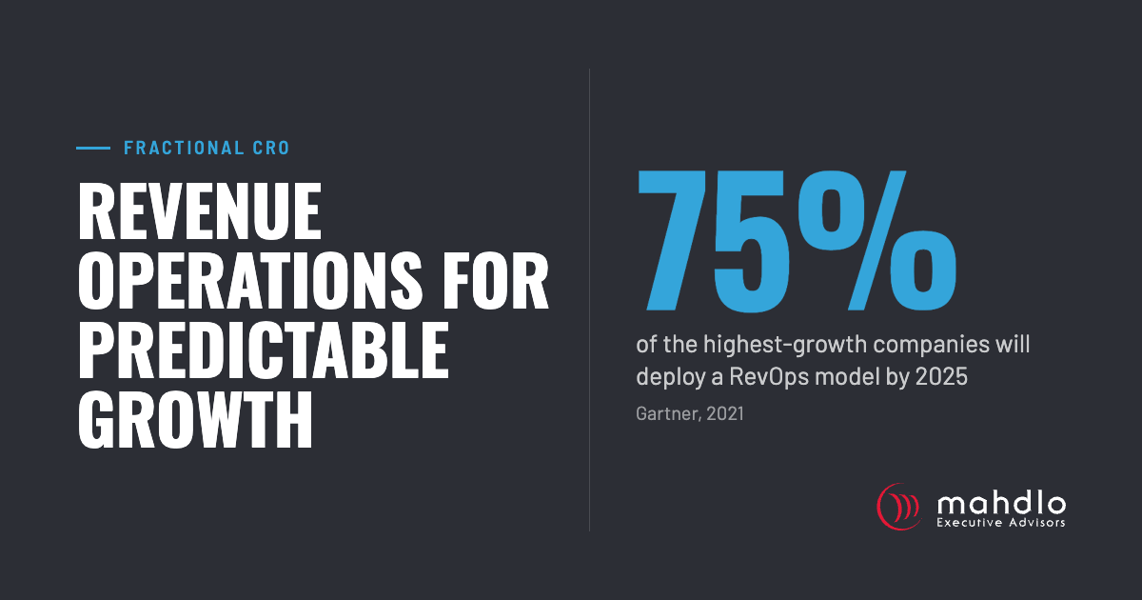
Gartner put it at 75%: its 2021 research, Gartner Identifies Top Trends Shaping the Future of Sales, predicted that 75% of the world's highest-growth companies would deploy a revenue operations model by 2025. The reason is practical. Growth stalls when marketing, sales, customer success, finance, and leadership are each working from a different version of the commercial plan.
Revenue operations gives you one operating system for growth. It connects strategy to execution, establishes shared definitions, and makes performance visible early enough for leaders to act. For CEOs under pressure to improve forecast confidence, accelerate new customer acquisition, or prepare for the next stage of growth, that clarity matters more than another dashboard.
What revenue operations is
Revenue operations, often called RevOps, is the cross-functional discipline of aligning the people, process, data, technology, and management cadence that produce revenue. It is not simply sales operations with a broader title. It is also not a software implementation project.
A functioning revenue operations model gives every commercial team a common view of how demand becomes revenue and how revenue becomes durable customer value. Marketing knows which audiences and campaigns create qualified demand. Sales knows what qualification means, which opportunities deserve attention, and where deals are slowing. Customer success can see the promises made during the sale and the signals that affect renewal or expansion. Finance and executive leadership can assess performance using consistent definitions.
The goal is not perfect agreement on every decision. The goal is accountable execution. You want a commercial system where the handoffs are clear, the numbers reconcile, and leaders can identify the next constraint before it becomes a missed quarter.
Revenue operations creates one commercial operating system
The central value of revenue operations is a shared commercial truth. Without it, you can have capable people and still produce conflicting answers to basic questions: What counts as a qualified opportunity? Which pipeline stages are real? Who owns a stalled deal? Is weak performance caused by lead quality, conversion, sales capacity, pricing, onboarding, or retention?
When each function answers those questions differently, forecast meetings become debates about data rather than decisions about action. Teams spend time reconciling reports, defending attribution, and chasing late-stage surprises. The board sees uncertainty where it needs a credible plan.
A revenue operations model resolves this through agreed rules and disciplined management. It defines the customer journey, documents stage exit criteria, establishes source-of-truth data, and assigns ownership for each critical handoff. The outcome is not just cleaner reporting. It is better decision quality.
Pipeline coverage is a good example. That number is useful only when opportunity stages have consistent meaning. A large pipeline does not give you confidence if early conversations are labeled as late-stage deals. Lead volume is not a growth metric either, if sales cannot convert those leads into qualified opportunities. Revenue operations connects the metrics so you can see cause and effect.
Where revenue operations usually breaks down
Most companies do not need more meetings between sales and marketing. They need clearer decisions about ownership and measurement.
The first breakdown is misaligned goals. Marketing may be measured on inquiry volume while sales is measured on booked revenue. Both teams can hit their targets while the business misses its growth plan. Shared measures such as qualified pipeline created, conversion by segment, sales cycle length, win rate, renewal rate, and expansion revenue create a more useful conversation. The specific scorecard depends on your business model, but the measures must connect activity to commercial outcomes.
The second breakdown is inconsistent process. If one seller advances an opportunity after an initial call and another requires a confirmed business case, stage-based forecasting will be unreliable. Revenue operations sets practical entry and exit criteria. It also makes exceptions visible. A process should guide judgment, not pretend that every buyer moves in a straight line.
The third breakdown is fragmented data. A CRM, marketing automation platform, customer success system, and finance platform may all contain relevant information. That does not mean they tell the same story. Start by deciding which system owns each field and metric. Then establish the minimum data required to manage the funnel, forecast revenue, and assess account health. More data is not automatically better data.
The fourth breakdown is a lack of executive cadence. A weekly pipeline review, monthly operating review, and quarterly growth planning cycle can work well when each has a defined purpose. Weekly reviews should focus on deal movement and near-term risk. Monthly reviews should identify conversion constraints and demand gaps. Quarterly planning should reset priorities, capacity assumptions, and investment decisions. Without that rhythm, even strong analysis rarely changes execution.
How to build revenue operations in the first 100 days
A revenue operations transformation should create momentum quickly without forcing a rushed redesign of every system. We recommend overlapping planning, activation, and acceleration because commercial problems do not wait for a long assessment phase to end.
Plan around the growth constraint
Begin with the business objective and the constraint standing in its way. You may need more qualified pipeline, better conversion in a strategic segment, stronger channel partner performance, faster onboarding, or a more dependable forecast. Do not start with a technology wish list.
Map the revenue journey from target account to renewal or expansion. Identify the handoffs, current metrics, data gaps, and owners. Then establish a baseline for the measures that matter most. A baseline allows your executive team to distinguish genuine progress from anecdotal optimism.
This phase should also produce a clear revenue operating charter. It states the commercial priorities, decision rights, reporting definitions, meeting cadence, and accountable leaders. That document is simple, but it prevents months of drift.
Activate the highest-value changes
The next step is to address the few changes most likely to improve execution. That might mean redefining qualification, cleaning a limited set of CRM fields, creating account plans for a priority segment, or standardizing the handoff between demand generation and sales.
Avoid trying to redesign every workflow at once. A large enterprise with multiple business units may need phased governance and more complex reporting. A founder-led company may first need a consistent funnel definition and a reliable weekly forecast. The right scope depends on commercial complexity, data quality, and the urgency of the growth target.
Every activation should have an owner, a due date, and a measurable outcome. If a new qualification standard is introduced, measure stage conversion and sales acceptance. If channel partners are a priority, track partner-sourced pipeline, partner-influenced revenue, and time to first productive activity. Clear measures keep implementation connected to business performance.
Accelerate through management discipline
Acceleration comes from using the new operating model, not from publishing it. Leaders need to inspect the funnel, resolve cross-functional blockers, and make decisions based on the same data every week.
This is where fractional executive leadership can add value. An experienced Fractional CRO or Fractional CMO can bring the commercial functions into a single operating rhythm while internal leaders remain focused on their core responsibilities. At Mahdlo, our 100-Day Accelerator applies Plan, Activate, and Accelerate as overlapping phases so strategy begins translating into execution while the roadmap is still being refined.
Use AI to improve execution, not replace judgment
AI can strengthen revenue operations when it is applied to specific work. It can help teams identify incomplete CRM records, summarize account research, surface call themes, prioritize follow-up, detect pipeline anomalies, and prepare first drafts of internal analysis. Those uses can reduce administrative drag and speed up pattern recognition.
AI does not decide whether your commercial strategy is sound. It cannot settle unclear ownership, repair an unrealistic revenue target, or build trust between leaders who are working from competing assumptions. Human judgment remains essential in account strategy, positioning, deal risk, partner decisions, and executive trade-offs.
Start with one or two use cases tied to a measurable workflow. Define the source data, review process, and success measure before expanding adoption. That approach keeps AI focused on execution gains rather than novelty.
Make revenue operations an executive priority
Revenue operations belongs at the leadership table because it determines how reliably strategy becomes revenue. The strongest models do not centralize every decision. They create enough shared discipline for sales, marketing, customer success, finance, and product leaders to move quickly without pulling the business in different directions.
Your next move is to identify the commercial question your team cannot answer with confidence today. It may be the true state of the forecast, the source of qualified pipeline, the reason win rates have softened, or the accounts most likely to expand. Solve that question with clear ownership and a shared measure, then use the answer to drive action. That is how a revenue engine earns the confidence to scale.
Source cited: Gartner, Gartner Identifies Top Trends Shaping the Future of Sales (2021).
Related reading
Explore how Mahdlo Advisors combines strategy and execution to foster sustainable business growth. Discover tailored insights and innovative solutions.
See how we work →Where is your engine leaking?
Get a senior read in 30 minutes.
Not ready to talk? Get the sales prospecting guide →